
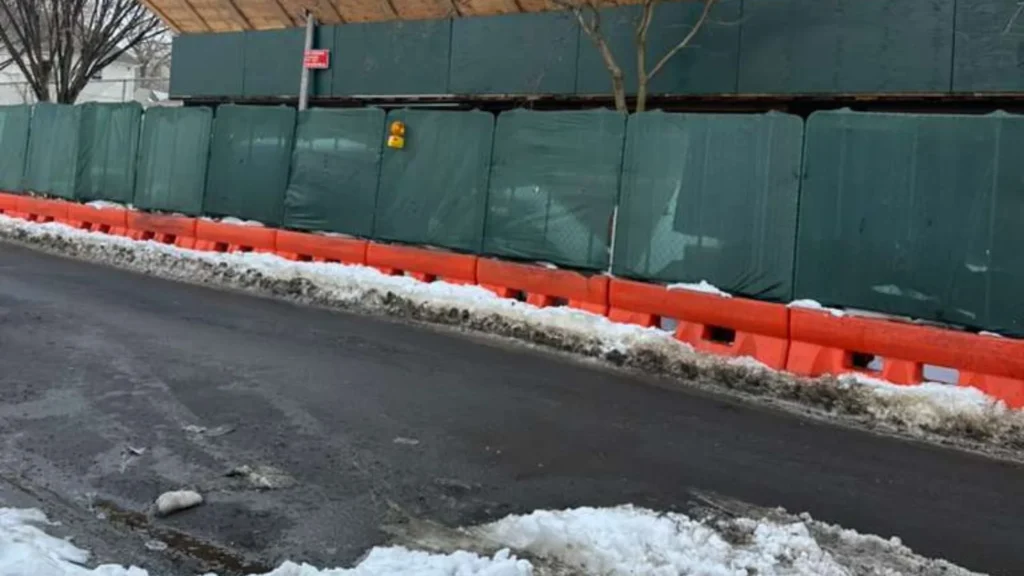
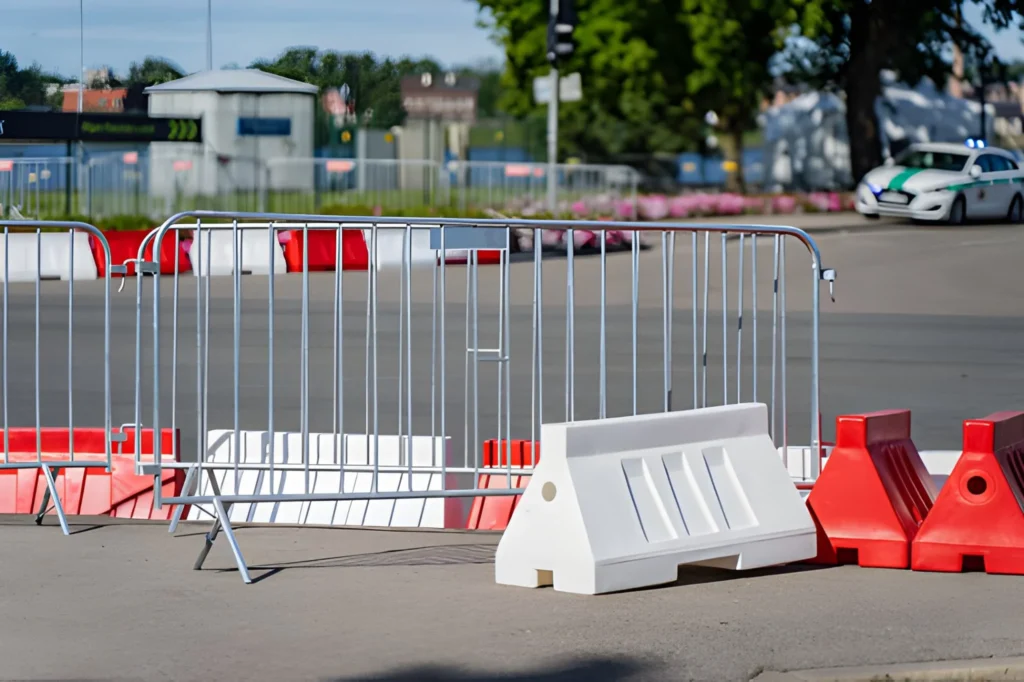
Concrete and water-filled barriers for street work zones and sidewalk shed footings, delivered and placed across New York City and northern New Jersey.
Placing a Jersey barrier in a NYC street or sidewalk work area may require a DOT occupancy permit, separate from any DOB shed or scaffold filing, depending on how the space is occupied. Certain roadway occupations exceeding one-third of the roadway width, or closures extending beyond 90 days, can trigger additional review. We handle the filing; you tell us the linear footage and the site.
The choice isn’t really about the barrier. It’s about the job. Duration, traffic speed, and how often the line needs to move point to an answer before “concrete or water-filled” is even a real question.
Tell us what your site engineer specifies, and we’ll confirm what we can supply against it.
Note: “K-rail” and “Jersey barrier” are commonly used regional terms for precast concrete traffic barriers; the exact barrier design and application can still vary by project.
This is often the part that affects whether a barrier installation can start on schedule.
If footings, scaffolding, or storage extend past the curb into the roadway, the work may constitute a NYC DOT street occupancy requiring the applicable permit through the city’s street-permitting system. NYC DOT’s Street Works Manual provides the broader permit and work-zone guidance for construction activity in the street.
New Jersey works differently. Roadway and sidewalk occupancy is governed at the municipal level, and on state highways, by NJDOT. The NYC thresholds above do not carry over to New Jersey; requirements should be confirmed with the local municipality or NJDOT for the specific job.
We file these permits as part of the rental. See how DOB and DOT filing works together on a shed job, or New Jersey requirements for municipal specifics.
If you came to this page from a sidewalk shed job, this is probably the section that matters.
Footings and scaffold bases that extend past the curb need physical separation from traffic and pedestrians, not just a DOT permit. Where work or storage next to a shed isn’t already contained inside a fenced site, applicable code provisions may require either a chain-link fence at least 8 feet high, or a solid barrier at least 32 inches high topped with chain link to 8 feet (hoist and chute zones follow separate rules).
That’s where barrier and fencing work overlap: a concrete barrier base with chain link above it can function as a combined separation system rather than two unrelated site products. Full fence specifications live on temporary fencing; this page covers the barrier half of that combination.
Separating the work zone from the storage area also matters: vehicle access, pedestrian movement, active work, and material storage should each have a defined boundary.
Renting the barrier is only part of the job. Getting it into position safely on a live street is where delivery and placement planning matter.
It starts with a site survey: linear footage, whether the placement is sidewalk or roadway, and what the permit type requires for encumbrance and pedestrian clearance. Concrete barriers need lifting equipment to set correctly and interlock end to end, and on an active roadway, placement usually happens alongside traffic control.
Jobs change shape. If the closure footprint shifts mid-project because the work area or project schedule changes, barriers can often be repositioned rather than removed and replaced with a new rental. At the end of the rental period, collection reverses the process: scheduled removal, site cleared, pedestrian and vehicle access restored.
If your crew already handles lifting and traffic control in-house, we coordinate placement timing around that. If not, ask what’s included for your specific site; capability varies by job.
New Jersey Sidewalk Shed & Scaffolding delivers and places barriers across all five NYC boroughs, including Manhattan, Brooklyn, Queens, the Bronx, and Staten Island, plus Hudson and Essex Counties in New Jersey. Roadway and sidewalk work zone rules differ by jurisdiction, which is why permit filing is handled locally rather than as a single blanket process.
Whether you need pipe-and-frame scaffolding for irregular geometry, a supported system for a commercial project, or help determining the right setup, we can assess the site and recommend the appropriate solution.
In NYC, placing construction material or equipment in the street generally requires the applicable DOT permit, including shed or scaffold footings and barriers extending past the curb into the roadway.
An Occupancy of Sidewalk Permit may be required when more than 3 feet from the property line is obstructed or when a 5-foot clear pedestrian path cannot be maintained, subject to the applicable DOT requirements. If the footprint fits inside those limits, sidewalk occupancy typically doesn't require this specific permit.
Roadway encumbrance is generally limited to one-third of the roadway width and one lane from the curb; wider occupations may require a separate street-closing approval. Anything wider than that changes which filing applies before work can start.
A Full Closure Review may be triggered when a continuous closure reaches 90 days. Closures extending beyond 180 consecutive calendar days may also require a CRIA statement. Worth building into the schedule on any longer facade or shed project.
Displaced or struck barriers creating an active safety hazard can require an emergency response; that's where our 24/7 response line comes in, with an average 2-hour arrival.
Longer-duration jobs and higher-speed exposure generally call for concrete; short-duration work or a layout likely to shift favors water-filled.
Licensed scaffolding rental, sidewalk shed installation, and 24/7 emergency site protection across all five NYC boroughs and Northern New Jersey.